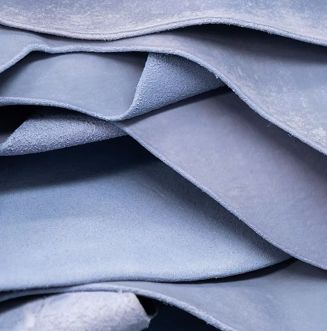
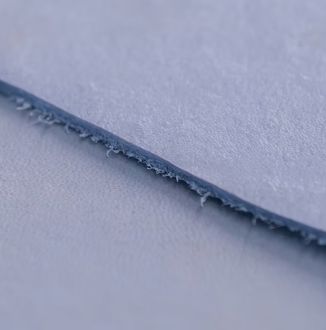
Wet blue bovine hides for footwear, automotive and upholstery: applications, specifications and how to choose a suppliers
Wet blue bovine hides are the starting raw material for the majority of leather goods produced worldwide. From the moment they leave the tannery as a semi-processed material to the finished product on a shelf or in an automobile, they pass through a complex supply chain in which every quality decision on the raw material is reflected in the final result. This article examines the main applications of wet blue bovine hides — footwear, automotive, upholstery and leather goods — the technical specifications required by each sector and the criteria for choosing a reliable European hide supplier.
Italian Expertise in Wet Blue & Wet White Leather
From wet blue to finished leather: the bovine hide supply chain
Wet blue is a semi-processed material, not a finished product. When a tannery purchases wet blue hides, the journey to the finished product requires several additional processing stages: retanning, dyeing, fatliquoring, drying, staking and finishing. Each stage adds value but also cost, and the quality of the starting wet blue determines the margins available at every subsequent stage.
High-quality wet blue hides allow greater finishing yields, less waste, more uniform dyeing and a final product with superior characteristics. Lower-quality wet blue forces the tannery into costly corrective interventions that increase production time and reduce commercial yield.
Processing raw bovine hides into wet blue and then into finished leather is therefore a supply chain in which the quality of the raw material at the first stage multiplies — positively or negatively — throughout the entire production process.
Wet blue hides for footwear: specifications and requirements
Footwear is the most important end market for wet blue bovine hides globally. Bovine leather uppers require materials with precise technical characteristics that must already be present in the wet blue raw material before finishing.
Thickness is the primary parameter. For classic footwear uppers, work is typically done at thicknesses between 1.2 and 1.8 millimetres after shaving, which requires wet blue hides with adequate raw thickness and high uniformity. For work footwear and safety footwear, greater thicknesses are required, with bull and steer hides as the preferred category.
Grain is the second critical parameter. Heifer hides, with their fine and regular grain, are particularly valued for quality footwear and women’s footwear, where the surface must accept thin finishes and polishes without showing irregularities. Cow and bull hides find greater use in casual, sports and work footwear.
Full grain is the most prized part of the bovine hide for quality footwear. It is the surface layer of the hide, the one that retains the natural grain of the animal, processed without heavy corrections to maintain the natural appearance and softness of the material. A wet blue hide with quality full grain — few defects, fine grain, uniform thickness — is worth significantly more than a hide destined for split leather production.
Split leather is the lower layer that remains after splitting off the full grain. It is used for soles, linings, mid-range leather goods and footwear that requires heavy finishing such as nubuck or corrected grain.
Wet blue hides for automotive: the most demanding sector specifications
The automotive industry has the most stringent technical specifications for wet blue bovine hides. Leather coverings for seats, door panels, dashboards and steering wheels must meet requirements that go well beyond simple aesthetic quality.
Abrasion resistance is a primary requirement. Leather seats in an automobile must withstand tens of thousands of rubbing cycles without showing surface deterioration. This requires wet blue hides with dense and compact fibre structure, a characteristic typical of good-quality bull and steer hides.
UV stability is a second critical requirement for automotive. Hides exposed to sunlight through the car windows must maintain colour and mechanical characteristics for years. The quality of the starting wet blue directly influences the capacity of the finished leather to resist solar radiation.
Fogging resistance — the tendency of leather to emit vapours that condense on the windows of the passenger compartment — is a parameter measured by standardised methods and imposed by automotive manufacturers as a contractual requirement. Wet blue hides destined for automotive must come from tanneries and suppliers that guarantee compliance with these limits from the early stages of the process.
Usable surface area is particularly important for automotive, where the panels to be covered are large and require continuous pieces without joins. Bull and steer hides, with their greater surfaces, are the preferred category for this sector.
Wet blue hides for upholstery and furniture
The leather furniture sector — sofas, armchairs, seating, decorative panels — has different technical requirements from footwear and automotive, but no less precise.
Usable surface area is the most critical parameter for upholstery. Sofas and armchairs require large continuous pieces of leather to minimise visible join points. Bull and steer hides, with their above-average surface areas, are the preferred choice for this sector.
Softness and drape are important characteristics for quality residential furniture. A wet blue hide destined for this market must have a fibre structure that allows, after finishing stages, a leather with good drape and pleasant hand feel.
Long-term wear resistance is a requirement that end consumers verify over years of furniture use. Higher-quality wet blue hides, with compact and uniform fibre structure, guarantee greater durability of the finished product.
Wet blue hides for leather goods and accessories
Leather goods — bags, wallets, belts, backpacks and accessories — is a sector that requires wet blue hides with very specific characteristics in terms of grain, surface and absence of visible defects.
Heifer hides are the most valued category for quality leather goods, thanks to their fine grain, regular surface and natural softness. For luxury leather goods, first-grade hides are selected with minimal defects and particularly uniform grain.
Full grain bovine leather is the base for the most prestigious leather goods, where the natural surface of the hide is enhanced without heavy corrections. Split bovine leather finds use in mid-range goods and in non-visible components of accessories.
Thicknesses required by the leather goods sector are generally lower than those for footwear and automotive, with a preference for thinner and more flexible hides that allow precise workmanship and clean stitching.
How to choose a European wet blue hide supplier
Choosing a wet blue hide supplier is a strategic decision that goes beyond simple price comparison. The criteria to evaluate are multiple and concern both product quality and the reliability of the commercial relationship over time.
Supply chain traceability has become an increasingly important requirement for international buyers. Knowing which slaughterhouses the hides come from, in which district they were processed and under which environmental standards is information that international brands require from their finished leather suppliers, who in turn require it from tanneries, who in turn require it from wet blue traders.
LWG certification — Leather Working Group — has become the international reference standard for traceability and environmental sustainability in the tanning supply chain. A wet blue hide supplier certified as an LWG approved trader guarantees that the hides traded come from audited supply chains compliant with international standards.
Supply continuity and consistency are parameters verified over time. A reliable supplier is able to guarantee consistent volumes, stable quality and respected delivery times even during periods of greatest pressure on the international hide market.
The geographic and product specialisation of the supplier is a further element to consider. A trader specialising in European bovine wet blue hides, operating in the reference tanning district, has access to a product range and market knowledge that a generalist trader cannot guarantee.
Italian leather hide suppliers, and in particular those operating in the Arzignano tanning district, represent a reference point for the international leather industry precisely because of this combination of specialisation, geographic proximity to the best European raw material sources and decades of accumulated technical expertise.
Unionpelli: Italian supplier of European wet blue and wet white bovine hides
Since 1994 Unionpelli has operated in the Arzignano tanning district as a specialist trader of European wet blue and wet white bovine hides. Its position at the heart of Europe’s most important tanning district allows the selection and supply of bovine hides — bulls, steers, heifers and cows — with an in-depth knowledge of both product and market.
Unionpelli supplies wet blue and wet white hides to tanneries and leather goods manufacturers across Europe and international markets, holding LWG certification as an approved trader in line with the standards of the Leather Working Group, the international organisation that audits leather industry companies on environmental performance and supply chain traceability.
The product range covers all main categories of wet blue bovine hides for footwear, automotive, upholstery and leather goods, with selection and grading carried out according to precise and documented technical criteria.
For information on available product and to receive a quote, contact our team.
Wet blue bovine hides are the raw material at the foundation of every quality leather product. Understanding the technical specifications required by each application sector — footwear, automotive, upholstery, leather goods — and choosing a certified, specialised European supplier is the starting point for building a solid, traceable and competitive production supply chain over time.